Planning Approval Is Not a Building Permit: Four Documents to Check for a Batumi New-Build
A polished rendering cannot establish whether construction is authorised or the finished building is ready for use. Here is how to read four different records.

A new apartment development can look complete long before it exists. The drawings are polished, the number of floors is fixed in the brochure and a delivery date appears on the sales page. Yet **planning approval, a construction permit, a commissioning decision and a property-registry extract are four different things**. None is a substitute for the others.
For someone considering a new-build in Batumi, this distinction has practical consequences. A statement that a project has been “approved” may refer to the parameters of a site rather than permission to carry out particular construction works. Likewise, receiving keys and being legally entitled to operate a building are not necessarily the same milestone.
1. A development plan describes what may be built
Georgia's Code on Spatial Planning, Architectural and Construction Activities separates land-use conditions from the construction permit itself. In the ordinary two-stage procedure, the first stage approves the conditions for using the plot for construction; the second issues the construction permit. Where a detailed development plan applies, that plan can replace the separate first-stage procedure. **It does not automatically replace a permit when one is legally required for the building in question.** [1]
A development plan helps establish the intended use and parameters of a site. It does not, by itself, prove that permission for the particular building has been granted, that work has started or that the developer may deliver every feature shown in a marketing rendering.
Ask for both the relevant planning decision and the separate legal basis for the proposed works.
2. A construction permit concerns the actual works
A permit is a distinct administrative decision. Under the Code, construction-permit authority normally sits with the municipality's executive body or an authorised public-law entity. Requirements depend on the class and nature of the work: buildings in Classes III and IV generally require a permit, while certain lower-risk works can fall under notification procedures or exceptions. It would therefore be inaccurate to claim that every structure is subject to exactly the same permit route. [1]
The most useful check is not merely to ask whether a “permit exists”. Compare the **plot identification, applicant or permit-holder, approved use and dimensions, decision number and date, and later amendments** with what the seller is offering.
The Code provides for electronic applications and publication of the relevant administrative decisions in the prescribed systems. For a particular Batumi property, identify the record that actually relates to that plot, or ask the competent authority for the decision. A failed keyword search alone is not proof that no approval exists. [1]
3. Commissioning is a different milestone
A building described as “delivered” may mean that the facade is finished, buyers are receiving keys or an official commissioning act has been issued. Those claims should not be treated as interchangeable.
Article 139 of Georgia's construction Code provides for commissioning rules for buildings in Classes II–IV, with a different treatment for Class I. Article 139¹ addresses restrictions on operating buildings before commissioning and rules for electricity and natural-gas supply, including an exception for construction-related use. [1]
An official commissioning decision is not a guarantee that every finish is satisfactory or that there are no concealed defects. Separate technical and contractual checks remain important. But neither a newly painted lobby nor a handover promise substitutes for the legally required commissioning process.
For a supposedly completed building, ask for the decision number, date and issuing authority.
4. The public registry answers a property-rights question
Georgia's National Agency of Public Registry (NAPR) registers immovable-property rights, public-law restrictions, tax liens and mortgages, and maintains cadastral records. An extract can help establish the legal position of a plot or unit. It cannot, on its own, certify a building permit, construction quality or commissioning. [2]
Make sure the record identifies **the same property and the same legal interest** involved in the proposed transaction. A record for a land plot must not automatically be taken as proof of ownership of a particular apartment that has not yet been delivered.
NAPR also publishes procedures for requesting registry extracts and cadastral plans. Check the agency's current service page rather than relying on old fee tables circulated in promotional material. [3]
Five checks before paying a deposit
1. **Establish the identifiers.** Ask for the land parcel's cadastral code, exact address and the legal identity of the seller. If the plot and company names differ across documents, seek a documented explanation. 2. **Separate planning from permission.** Obtain the detailed plan or land-use decision, and the applicable construction permit or lawful basis for a notification procedure. 3. **Read the permitted scope.** Match the approved building, storeys, use, significant later amendments and the offered unit against the drawings and contractual promises. 4. **For an existing building, verify commissioning.** A key handover is not itself evidence of an official commissioning act where one is required. Inspect the building's actual condition separately. 5. **Check the registry and the contract.** Compare the seller, property description, registered rights and restrictions. Consider an independent legal review and technical inspection before making an irreversible payment.
These checks reduce uncertainty; they cannot guarantee punctual completion, construction quality, future rents or the absence of disputes. An off-plan purchase also requires careful assessment of the payment schedule, contractual remedies and how changes to the proposed development may be handled.
Four records, four questions
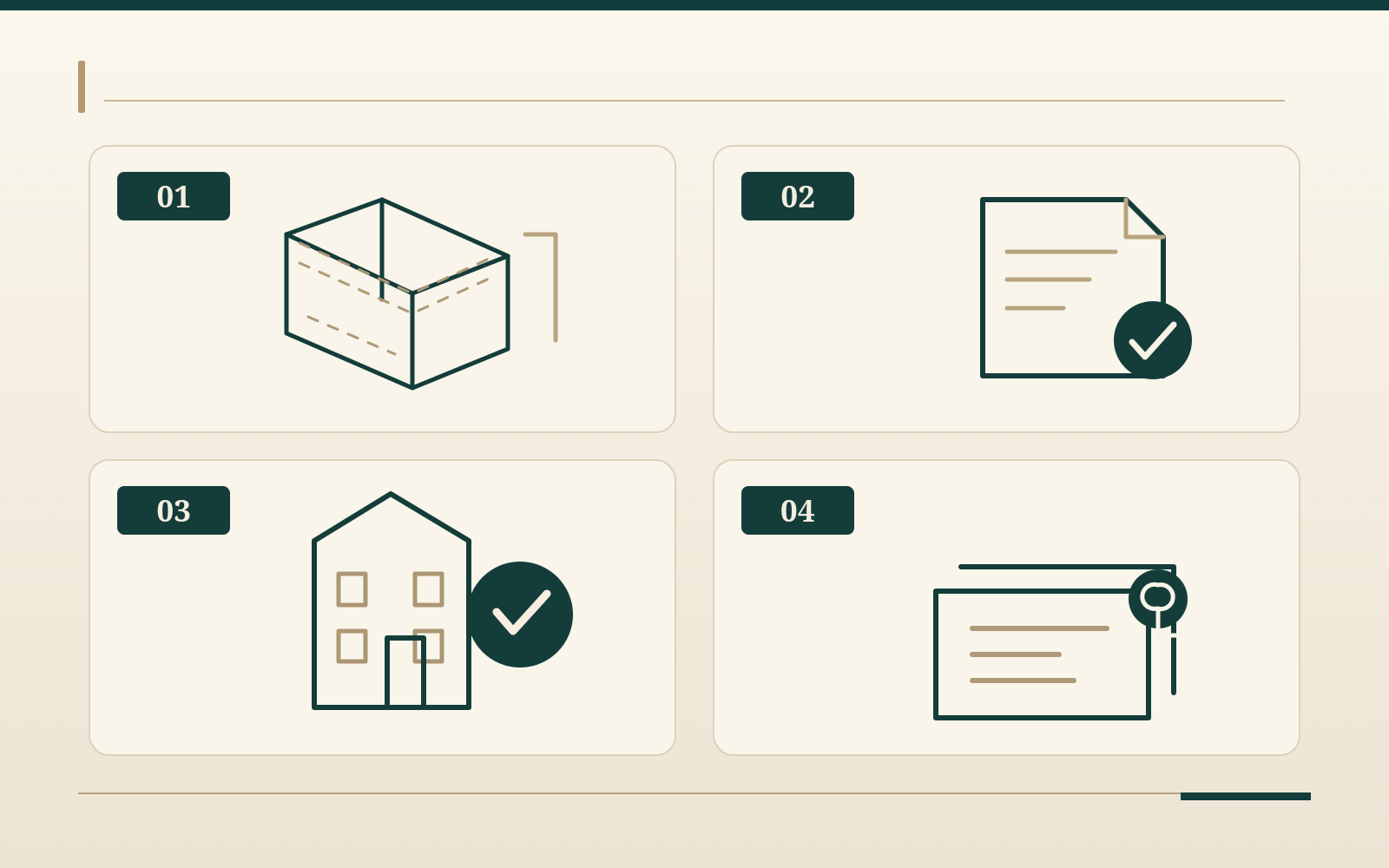
**Planning:** what development parameters apply to this site? **Permit:** what building works have been authorised? **Commissioning:** can the completed building legally enter use under the applicable rules? **Registry:** what property rights and restrictions are recorded?
A careful buyer reads these sources together rather than looking for one document labelled “approved”.
### Quick answers
**Does an approved detailed plan mean construction may begin?** Not necessarily. It may replace the separate first stage of the permit process; that is not the same as issuance of the permit itself.
**Does a registry record prove the building was commissioned?** No such conclusion follows from the registry entry alone. Check the applicable commissioning requirement separately.
**Does a permit guarantee delivery by the advertised date?** No. The permit is not a completion guarantee. Contractual obligations and actual progress need their own checks.
### Primary sources
[1] [Georgia's Code on Spatial Planning, Architectural and Construction Activities](https://www.matsne.gov.ge/en/document/view/4276845), including Articles 93–102, 139 and 139¹.
[2] [National Agency of Public Registry — remit and registered rights](https://www.napr.gov.ge/en/about-agency).
[3] [NAPR — informational services and registry extracts](https://napr.gov.ge/en/page/fees-and-terms/informational-services-fee).
*Sources reviewed for this editorial draft on 1 November 2026. This article is general information, not a substitute for property-specific legal and technical due diligence.*